To my 16 year old self in the abortion clinic {a story of loss and healing + a book giveaway}


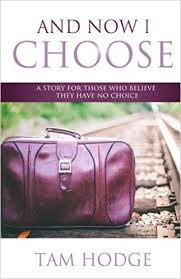
Today, I am honored to share my space with author, Tam Hodge. Her book, "And Now I Choose: a story for those who believe they have no choice," is the story of how she found hope and healing after suffering abuse, homelessness and multiple abortions. Tam has graciously offered a free copy of her book to one of my readers. Please leave a comment. Recipient will be randomly selected and notified by email. I hope Tam's story touches your heart as it has touched mine. xo. EE.


A Letter To My 16 Year old Self in the Abortion Clinic

Dear 16 year old Me,

It’s 28 years, almost to the day, from where you are sitting right now. I see you there.

I see you in your white paper gown that you’ve struggled with all afternoon, trying to prevent it from opening and exposing your bare self. I see you sitting there, even in the gown, still bare.

A part of me feels like you can hear me. Or, at least, you sense me. I can see it in your eyes. You’re looking around the room, searching for something, but you can’t find it. It’s me. You’re searching for your voice. I know you want to get up and run. I know you are afraid. I know you feel alone. I know you know what to do but you’re too afraid to do it.

I know deep down you don’t want to do this. I understand.

You are going to wake up soon and you will be in a tremendous amount of pain. You will physically hurt. You will hurt a lot. Oh, how I wish you could hear my voice right now. Because the physical pain will pale in comparison to the heart and emotional pain you will carry with you.

I see you waking up. I see you crying. I see you holding your tummy. Yes. Yes, you did it. No. No, it isn’t there anymore. It’s gone.

I want so badly to hold you. I know no one is holding you. I know no one is going to hold you. I’m sorry you’re alone. I’m sorry you feel alone. But you’re not. I’m there. God’s there. You don’t know it… but we are.

You need to know that you’re going to have a very tough journey. You’re going to be very mad at yourself. The amount of shame will feel heavier than anything you’ve ever felt before. You will hurt in ways that you will never understand.

You will think about this day forever. You will find yourself rubbing your tummy, crying, wondering…

You will have triggers. You will have reminders. It will never go away.

Can you hear me? Why can’t you hear me? I want so badly for you to hear me.

You can’t see it now, but your life is going to get better.

Though the memory of that day will never, ever, go away. You’re going to relive the day you spent in that white gown. You’re going to relive it often. It will always be a part of who you are.

But one day you will learn about grace and forgiveness. One day you will learn about true love. Hold onto that. Tuck that away in your heart, because there will be days when the hope of that moment will be all you have.

Tam, you need to know that I forgive you. And I will forgive you when you’re back in that gown next year, too. I understand why you’re doing this. You really believe you have no other option. Why can’t you hear me…

I will be here waiting for you, and you will soon see that forgiveness and redemption will hold your heart and you won’t be alone any longer.

You will find that one day, the choice that you are making now, will somehow help another young girl not make the same decision.

And though that doesn’t make what you’re about to do right, it will at least give those little ones a beautiful legacy.

But still, I wish you could hear me...

***

Tam Hodge is a writer and speaker. You can find her online at www.tamhodge.com and on Facebook. She lives in Franklin, TN with her husband and their two children. Tam says: "If I could share one thing with everyone I meet it's that we don't have to live under the pain and regret of our life's choices and hurts. We can let them grow us into something powerful that God can use to help others." Thank you, Tam, for sharing your love and light with us.

Elizabeth EstherComment
Willpower vs. Willingness

As I'm becoming aware of my addictive behaviors around food, I'm learning quite a bit about the difference between willingness and willpower. I'm noticing that relying on willpower to resist over-eating doesn't work. My willpower manifests itself through diets, resolutions, commitments; i.e., "trying harder." I've learned the hard way that addictive behavior doesn't respond to "trying harder." It does, however, seem to respond to willingness; a willingness to let go to a power greater than myself; i.e., God.

I've sketched out some of the differences between willpower and willingness and thought I'd share them with you:

Willpower is:

  1. Finite: even if I have the most amazing willpower at 8am, chances are that by 2pm, my willpower is fizzling out. There are limitations to my willpower. Therefore, relying on willpower alone is not a reliable tool for sustaining healthy eating.
  2. Affected by external circumstances: it's easy for me to make healthy choices when the bills are paid, the children are happy and my marriage is peaceful. When everything is going well, so is my willpower. But when stress comes, my willpower loses strength. I need something stronger than my own willpower to help me eat healthily even in times of stress.
  3. Self-generated: my willpower comes from me. The problem is that my food addiction is stronger than me. All my resolutions and diet-plans fall down when faced by the cunning beast that is my hankering for Skittles. 
  4. A brutal dictator: There is no room for grace or mistakes in my willpower. When I fail, my willpower just tells me I wasn't trying hard enough. My willpower shames me so hard that I usually give up because I can't even live up to my own standards for myself.
  5. Isolating: my willpower functions from a place that says I can do this all by myself, that I am the "self-made" hero of my own story. My willpower won't allow me to ask for help. It certainly won't allow me to admit my mistakes to others. The thing is, I can't get better on my own. I need the help and fellowship of those who have struggled and found some recovery.

Willingness is:

  1. Infinite: willingness is limitless because it doesn't come from myself, it comes from God. Yes, I do my part by making a decision to turn my will over to the care of God but then God is right there, immediately meeting that decision with an infinite supply of His grace and strength. Willingness comes after I've experienced God's love. I can only turn over my will to God when I believe a. God is good and b. God loves me. In his book, Breathing Under Water: Spirituality and the Twelve Steps, Richard Rohr writes that turning our lives over to God means, "a radical surrendering of our will to Another whom we trust more than ourselves" (p. 21). When I come to believe that God is FOR me, everything changes. I am more than willing to surrender because saying "Thy will, not mine be done" isn't scary; it's more like relief, more like letting my burden fall into the unconditional love and mercy of an ever-loving God.
  2. Hopeful: unlike willpower, willingness is not affected by circumstances. Willingness is founded in hope: hope that things can get better, that everything will work out, that God will do for me what I cannot do for myself. Willingness is not derailed by stress, a broken washing machine, grouchy kids or my own exhaustion. I can be willing even when everything is falling apart. Willingness is the hope that says: "I can't, You can, I'll let you."
  3. God-generated: willingness isn't dependent upon my ability to "work up" some kind of feeling or transformational energy. 
  4. Full of grace and truth: willingness is an economy of acceptance. Shaming myself only makes things worse. I know the truth (things need to change) and grace is the willingness to accept help. 
  5. Fellowship: willingness leans on the support of others. Willingness understands that we cannot heal alone. We need the non-judgmental support of those who have struggled similarly. In the fellowship of brokenness, it is safe to be willing.


The question is: how do I become willing?

My 12-step sponsor suggests that one way to become willing is to pray for the willingness to be willing. Ha. 

Also, pain. When I'm in enough pain (regret for overeating, shame, feeling yucky, low energy, etc), then I become willing to do something different. When the consequences for my overeating become painful enough (stepping on the scale, for example), then being willing to change is the lesser of two pains.

I wish I could say I choose willingness because I'm all spiritual and stuff. But NOPE. Usually, I find willingness once the consequences of my addictive behavior are more painful than turning my will over to God.

In other words, I get SO SICK of doing things my way that I'm finally like: God's way has to be the better option. At the very least, I'm willing to see if it is. I'm willing to see if maybe God is God.

Elizabeth EstherComment
Deprivation is the road leading straight to Taco Bell

Some of my food-sober friends say that the first step is awareness. If that's true, then boy oh boy am I aware. For a long time I was eating unconsciously, just stuffing food into my mouth whenever and wherever and without any kind of awareness.

Now, I can see my hand going toward my mouth and I'm all: WAIT. IT'S NOT MEAL-TIME. WHY AM I SNACKING?

And then I get to sit there and feel all my feelings. WHICH REALLY SUCKS.

I would so much rather stick a handful of Cheez-its in my mouth than feel all my feelings.

Here's the awful truth: after I binge on Cheezits, I feel even worse. I still feel what I felt before I ate and on top of that, I feel guilty for eating so much.

It's been really hard for me to admit this to myself but I have a problem with gluttony. I am a compulsive overeater. Cue weeping and gnashing of teeth.

Here's why I want to change: because I just don't feel good. Eating like this makes me sluggish, tired, low-energy, grumpy.

This week I discovered that being tired is a HUGE trigger for me. My brain starts short-circuiting. My eyes get prickly. My back hurts. My shoulders sag. I yawn incessantly. And then I start snacking.

I learned this awesome little acronym: H.A.L.T. It stands for: Hungry, Angry, Lonely, Tired.

Whenever I'm feeling super-tempted to gorge on Cheezits, I HALT. I ask myself: am I hungry, angry, lonely or tired? I'm beginning to distinguish between Real Hunger and Boredom/Stress Hunger. I'm also realizing that my body needs to nap. Everyday. I'm a napper. It's just how it is. If I don't get a 15-20 minute nap at about 2pm, I will be a raving lunatic by 5pm.

Here's another revelation: you're supposed to feel hungry before a meal. That's normal. Huh. WHO KNEW?!

It's like I've been running around for the past two years desperately trying to avoid Ever Feeling Hungry. Because feeling hungry makes me feel all kinds of other things like: anxious, worried that I won't get enough....

I'm still working on what foods I need to abstain from—I'm going really slow about this because my tendency is to OVERWORK my food program. I will abstain from All The Things! I'll never eat sugar again! DEATH TO DONUTS!

But deprivation is the road that leads straight into Taco Bell. DON'T ASK ME HOW I KNOW.

Yesterday afternoon by 4pm, I was exhausted. I'd been driving the kids around all day long. Then my washing machine broke. Then one kid sprained his ankle. Another kid lost her favorite friendship bracelet.

I was crying by 4:30pm. And I still needed to make dinner. GAH.

Here's another thing I learned: I need to plan my meals in advance because if I wait until I'm starving, I will just grab whatever is in front of me. 

Awareness, man. It's like my entire life has been lit up by stadium lights and I can't NOT see what I'm doing. I can't pretend anymore. I see it all and holy maccabees, this food-sobriety journey will probably last the rest of my life.

This is Day 2.

Elizabeth EstherComment
Hi, I am Elizabeth and I have an unhealthy relationship with food

I.

"I want to tell you something," grandfather said, pulling me aside after a family dinner. "Don't let yourself go."

I blanched, felt the heat rise in my cheeks. I tried to suck in my tummy. I'd had a baby ten months ago and struggled with losing the baby weight.

I nodded furiously, forcing myself not to cry. "Of course," I said. "You're right. I'll work on it. I'll get skinny again."

He patted my shoulder. "That's a good girl."

That night was my sister's engagement party. The whole family had come together to have dinner at the beach. Sixteen years later, the only thing I remember about that night are the words my grandfather said. And how much I hatred I felt for my post-pregnancy body.


II.

Small. Quiet. Preferably, invisible. These were the virtues of womanhood.

Take up as little space as possible. Keep your thoughts to yourself. Make yourself useful and helpful—but without drawing attention. Eat small portions. And never take seconds.

The first time I had a Coca-Cola I was in high school. It was so sweet, too sweet. But Diet Coke—now there was a soda I could drink every day. It was diet.


III.

Every year or so there was some new "holy" diet. Pritikin. The Zone. Juicing. Cleanses. And if there wasn't a diet, there were prohibitions: no sugar, no white flour, no white rice, sometimes no dairy, millet for breakfast, steel-cut oatmeal. I stayed slender and small the first twenty years of my life. And then I had my first baby and couldn't stop eating.


IV.

I gained and lost, gained and lost for the next eight years. If I wasn't pregnant, I was breastfeeding. 

My eating was out of control. I developed an appetite for donuts—I'd never eaten donuts while growing up. And cheeseburgers. And fries. And pizza. Now that I was out of my parents house, I could bring home whatever I wanted. Diet Coke, Cheetos, Oreos. I discovered Dr. Pepper.

After the twins were born, I made a significant change. I started exercising regularly. Hard exercise. Bootcamp. I lost twenty pounds—which for a 5'2" woman like me makes a big difference. I was the fittest I'd ever been in my life. 

But then I wrote two books. 

V.

Since June of 2013, I've gained thirty five pounds. 

For whatever reason, the stress of writing two books broke something in me. I couldn't stop eating. I was hungry all the time. Ravenous, really.

I was eating for comfort, eating to numb out, eating to relax, eating to celebrate, eating because I was bored.....

But then I couldn't stop.

VI.

Being strict with myself didn't help. Fasting didn't help. Trying a new diet didn't help.

I was burned out on bootcamp. High impact exercise was taking a toll on my joints. My knees ached all the time. My wrists and shoulders hurt.

Six weeks ago I began barre class.

Four weeks ago I attended my first Overeaters Anonymous meeting. I cried because I recognized my story in other people's stories. Afterwards, I felt sane. For the first time in two years, I didn't eat anything after dinner. I didn't need to eat anything. I didn't feel full but I felt...satisfied.

It's not about the number on the scale. I know the weight comes off—but something inside me needs to change.

There is a big, empty hole of hungry inside me that no cheeseburger can fill.

I can bootcamp my way to physical fitness, but that still won't heal the hungry little girl inside me.

It's time to make a change—but this time my goal is different. I'm not aiming at weight loss so much as I'm aiming at soul healing. I have an unhealthy relationship with food. I want to understand why

When I know better, I do better.

I'm tired of food running my life. I don't want to feel like this anymore. I want more of that sanity I felt at my first OA meeting.

Day One begins today.

That time I went to the dentist and won the prize for Champion Salivator

In hindsight, that TWANG I felt while the dentist drilled into my partially numbed skull was when I should have raised my hand. Or punched him in the nose. But since I'm prone to giving the patriarchy the benefit of the doubt, I did nothing but submit to the drill, baby, drill.

The second clue that Something Was Rotten In The State of Toothmark was when medicine-drenched cotton balls were stuffed into the gaping hole that used to be my cheekbone.

I was cranked into an upright position and firmly exhorted to sit still and not swallow, DO.NOT.SWALLOW. 

Of course, what I heard was: "We've just filled your mouth with poison. GOOD LUCK WITH NOT DYING!" 

And then the good doctor and his efficacious assistant scurried off to another patient while I sat alone in a quiet panic. I told myself not to salivate so I wouldn't need to swallow. DO.NOT.SALIVATE. Spoiler alert: salivary glands do not take kindly to orders.

Do you know how hard it is not to swallow when Niagara Falls is pouring into your mouth? It's like dry drowning, if such a thing exists. My only option was to drool all over that humiliating baby bib they tie around your neck.

"Georgia On My Mind" was piping through the overhead speakers. You know, soothing music to keep the masses from PANICKING OH MY GOD MY JAW IS DISSOLVING.

I hate that song now. Just an old sweet song keeps Georgia on my mind? Yeah right. More like an old sweet tooth keeps drill-a on my maxilla.

When the assistant came back to check on me she called me a "CHAMPION SALIVATOR" which was NO COMFORT AT ALL. Nor did it win me any prizes. On the bright side, I didn't swallow poison. Soooo.... winning?!

Then there was more drilling and more smoke spiraling up out of my mouth and flecks of tooth flying in all directions. It was basically the Battle of Waterloo going on in there. I closed my eyes and said my final prayers. I said goodbye to my children. I apologized to my dogs for not giving them more treats.

And then the dentist was like: "You're all set."

I blinked.

What?! I'm alive?! I survived.That was my prize. Well, that plus a bottle of Norco.

Guess how long it took for the searing pain to stop smarting? Yep. Two weeks. Just in time to come back in and get the permanent crown cemented into my head. Because that is so exactly how my life goes.

I don't mind telling you that I cried like a baby the second time around. No, really. They had to stop everything, sit me up and offer tissues until I could pull myself together.

Here's the thing: I've birthed five humans. I know pain. But this pain? It was unreasonable. I mean, when you push seven pounds of baby out of your body, you expect it to hurt, ya know? But one tiny tooth RUINING MY LIFE FOR WEEKS? That's nope. That's what I call Nope-Pain.

Here's what's crazy: three days after the permanent crown was in, the pain magically disappeared. All of it.

I could finally chew on that side of my mouth like a normal human. No more gnawing at steak with my front teeth. No more nibbling at soft foods like a geriatric squirrel. I finally had a properly functioning mandible.

It was GLORIOUS.

And the heavens opened and all the angels and saints rejoiced for the woman who forgot her anguish because of her joy that her new porcelain tooth had been born into the world.

Now, I'm recommending my dentist to everyone I know because oh my word he's not the patriarchy, he's a superhero. The Tooth Liberator, if you will.

He will free you from your miserable banana diet and liberate you to steak and nachos! He will restore all mandibles unto himself! He even swoops in singing hymns! "CROWN THEM WITH MANY CROWNS!" 

Now, if you'll excuse me, I have some granola cereal to enjoy.

Why Jill & #JessaDuggar were not "speaking for themselves" in their interview with @megynkelly

This is what you need to understand about Megyn Kelly's interview with the Duggar girls: she wasn't speaking with Jill & Jessa themselves; she was speaking with an ideology.

Why? Because context is EVERYTHING. A free woman? Yes, she can speak for herself. But women inside families like the Duggars' are not free. In that environment, everything a woman speaks has been pre-approved and vetted by the men in "authority" over her.

From infancy, they are literally TRAINED to submit themselves to the "headship" and "authority" of men—first their fathers, then their husbands—because submitting to your father/husband is the same as submitting to God.

In this environment, it's impossible to think for yourself, let alone speak for yourself.

So, if you watched Megyn Kelly interview Jill & Jessa Duggar, you were listening to pre-approved talking points. You were listening to a cleverly crafted, Daddy-and-husband-approved message.

How do I know this? Because I had to do the same exact thing.

When I was living inside a fundamentalist group (you can read more about that in my book), I was coached on how to "give an answer" to anyone who asked about our way of life. I was told that whenever I spoke, I was representing The Family or The Church. If I ever spoke "off message," my good standing with God AND my family was in jeopardy. 

My well-being DEPENDED on me staying on message. Thus, I would have told ANY media outlet that I WANTED to be in my church and not to call my abusers ABUSERS. I, too, would have claimed to have forgiven and "moved on."

Most heartbreaking of all? I sincerely believed what I said. It was like religious Stockholm Syndrome. I loved my abusers.

Back to the interview.


Here are the talking points I noticed:


1.) The abuse wasn't abusive but the media talking about it is TOTALLY abusive. 

During the interview, Josh's sexual abuse was NEVER ONCE referred to as sexual abuse. It was repeatedly called "inappropriate touch" and "a mistake." When you can't name the evil, then you can pretend it doesn't exist. And that makes it easy to sweep it under the rug, tell yourself you're OK (hey, it could have been worse!) and "move on." Cleverly, though, the girls still hung onto the "victim" label—not as victims of Josh but as victims of the media. Megyn Kelly picked up this refrain and by the end of her show she was actually suggesting that public discussion of child abuse will PREVENT and DISCOURAGE other people from speaking up. Ugh. So irresponsible. The truth is that by raising awareness about this issue, MORE of us will recognize abusive behavior and SPEAK UP. 

2.) We didn't even know what had happened.

Both girls claimed they didn't "know what had happened." But there's a big difference between NOT KNOWING what had happened and NOT REMEMBERING it. Megyn Kelly *almost* made the distinction, but didn't follow up on it. My guess: Jill & Jessa remember very clearly what happened but because no-one had ever talked to them about sexual assault, they literally didn't KNOW it WAS sexual assault. 

3.) Our parents protected us. SAFEGUARDS!

This is probably the most heartbreaking talking point because it's the one most fraught with fear. In fundamentalism, the worst sin of all is to "bring shame" upon your parents. Speaking up, questioning, casting ANY doubt on your parents is a huge no-no. Even if Jim-Bob and Michelle HAD acted negligently, Jill & Jessa would NEVER say this outloud—and especially not on TV. Remember, they are under intense pressure to preserve the family reputation. I'm not Jim-Bob and Michelle did NOTHING to protect their daughters, but it's pretty clear it wasn't enough because the abuse happened repeatedly. My point, here, is that the context from which Jill & Jessa were speaking absolutely prevented them from even suggesting that their parents could have done more.

Many of you have asked: "Well, what SHOULD the Duggars have done?"

My friend, Mary DeMuth has a beautiful and touching response to this question. Please read her post: WHAT IF? 

THAT is how a Daddy defends and protects his daughter. THAT is what we ALL should do to protect our children.

That is what our precious children deserve.

The missing pieces of the #DuggarInterview: humility, responsibility, understanding

I almost feel a moral obligation to write about the Duggars—not because I am a former fundamentalist who wrote a book about that kind of life— but because I'm sick of the gleeful, click-baity tabloids dominating the narrative.

So, let's start there.

To the tabloids: shame on you.

I have no idea how tabloid editors sleep at night. They clearly have problem devastating the lives of four young women in pursuit of pageviews and money. Editors, if you truly CARED about the victims, you would have redacted and redacted and redacted until their identities were fully and completely protected. You cannot pretend to care about women while simultaneously destroying their privacy. Period.


To Jim-Bob & Michelle: I hear your story. Do YOU hear it?

There is something missing from the story Jim-Bob and Michelle told tonight. I've heard many, MANY Christians tell difficult  stories about their lives and I know when I can trust the words they're speaking because there are three essential ingredients: humility, responsibility and understanding.

The first missing piece of the story was humility.

Let me explain by summarizing the Duggars' main talking points: "We did all the right things. Josh repented. Everyone is fine. We love Jesus and that's why we're being victimized by the media." 

Nowhere in the interview did we hear Jim-Bob or Michelle express regret for launching a reality TV show in the immediate wake of the abuse (Josh was 15 when he was sent to a "Christian treatment center" and the show began when he was 16). Nowhere did they express sorrow for how badly they had handled things when they FIRST heard about it— a terrible lapse in judgment that led to further molestation incidents. 

The second missing piece was responsibility

Instead of taking responsibility for how they handled things, Jim-Bob and Michelle repeatedly deflected, shifted blame and defended their actions. At one point, Jim-Bob said he'd talked with "other families who had worse things happen." Did you catch that? Basically, Jim-Bob is saying: "Hey, what Josh did is NOTHING compared to what so-and-so's son did!"—which is really no defense at all but essentially an admission that there is ALL KINDS of sexual molestation happening in homeschooling/Quiverfull/ATI/Gothard families. I really hope the authorities follow up on that. 

It was pretty clear that the Duggars viewed themselves as the true victims. Michelle suggested there was "an agenda that purposed to twist and slander" them. Essentially, Michelle is saying: "People hate us because we love Jesus." You know, I'm really, really weary of Christians saying this. It's a cop-out. The truth is that this whole thing could have been avoided if the Duggars had simply been upfront and honest BEFORE they signed onto a TV show.

By not taking responsibility for the abuse going on in their own family, the Duggars simply participated in their future "media victimization." 

The third missing piece was understanding

In talking about the sexual molestation, Michelle said: "Every one of us has done wrong things. That's why Jesus came!" Michelle doesn't understand how this statement downplays abuse. Jim-Bob said: "This wasn't rape or anything like that"—I mean, what kind of comfort is that to victims of sexual abuse? It's like saying: "Hey, at least you weren't raped."

But those statements demonstrate the critical flaw in the Duggar fundamentalist theology; it's why they don't see sexual molestation as particularly worse than, say, lying about how many cookies you stole from the cookie jar. When everything is evil, NOTHING is actually evil.

What the Duggars fail to understand is how serious sexual molestation is and why it's not something you can just resolve at a "Christian Treatment Center." It's not something you sweep under the rug when a TV show knocks on your door. I think what most disturbed me about the Duggar interview was the way Jim-Bob kept trying to direct the interview to IT'S ALL RESOLVED NOW when what we really needed to hear was that he truly understands the gravity of what happened and why his subsequent actions were so disturbing. THAT was missing from the whole interview. THAT is what makes me worry for the safety and wellbeing of his other children.

Hear me on this: I truly feel pity for the Duggars. 

Watching their interview reminded me of the time I had to confront my cult-founding grandfather about the domestic violence happening in our family. Although my grandfather never admitted to his cover-ups (at least Jim-Bob admitted bad things happened), I recognized the similarities in speech and tactic.

Like my grandfather, Jim-Bob had a lot of "Christian-speak" going on. Jim-Bob talked about Josh becoming "a new creature"—I can only imagine how that sounded to a secular audience. A new what? What's a new creature? But this is the only language Jim-Bob has to describe what happened. Fundamentalism is, by its very nature, not a language of the heart but of a cold, black-and-white theology. 

Like my grandfather, Jim-Bob's answers to direct questions were vague and dodgy. On the one hand, I was relieved to hear that all the children involved had received "professional counseling." Then again, every fundamentalist I knew never took their kids to professional counselors. So, I was left with more questions than answers: what sort of professional counseling? And what kind of "Christian treatment center"?

It took me a long time to forgive my grandfather for the abuses he wrought on my family and so many others in our cult. My heart softened when I stopped seeing him as evil and began seeing him as a terribly, terribly sick person. I forgave him when I realized his lies had so sickened him that he was fatally ill with religious addiction. 

And this is how I feel about the Duggars. In my heart of hearts, I feel nothing but pity and sadness for them because this is a terribly sick family.

This is a family so entrenched in the story they've told themselves that even if reality differs, the Duggars would rather see themselves as victims of persecution than admit something might be wrong with the story they're telling. 

That should break all our hearts.


Books! Lip balm! Self-tanner! (my fun picks for summer)

I don't know about you but I am SO ready for summer! Beaches, books, cookouts, fireworks, hikes, long hours spent reading by the pool...I can't wait! I've put together a fun little list of my summer favorites and thought I'd share them here with you!

#1 Light Summer Reading

Can I be honest for a minute? My brain is tired. I've spent the last four years reading such serious, heavy books that I'm pretty sure the wiring in my brain is starting to short-circuit. This summer I plan on reading nothing but LIGHT, FUN, FLUFFY FLUFFERSONS. Here are my picks (you can click on book covers for direct Amazon link):


#2 Leave-in Hair Conditioner

My hair stylist recommended Marrakesh Argan & Hemp Oil Therapy and now I use it after EVERY hair wash. I've used a bazillion hair products (my hair is slightly wavy, fine and prone to breakage). This leave-in conditioner is BY FAR the best. It's light, non-greasy and smells AMAZING. As a bonus, it acts as a smoother and detangler. YAY, less split ends! PERFECT for summer!


#3 Breezy, fresh fragrance

I wear this perfume year-round but I especially appreciate it during the hot, sweaty summer months. Light, delicate with the barest hint of floral, all you need is one spray on your wrists and this Chanel Chance perfume will last the whole day. There are several varieties of Chance perfumes. I remember my favorite is the PINK ONE. :) Or, in fancier terms, "Eau Tendre." 


#4 Glowing daily moisturizer

I rarely use self-tanners but when I saw how beautifully this Jergens lotion worked on a friend, I had to try it. I use it every morning as a daily moisturizer for my legs and arms (avoid ankles, knee caps, elbows). The bronze color develops gradually—I saw results in about 7 days—and it looks just gorgeous. It even smells delicious!


#5 Mini lip balm

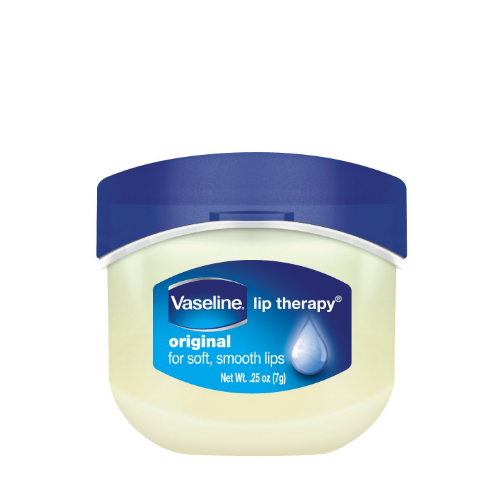
I know Vaseline isn't anything new or fancy but this MINI size is super convenient. I bought it on impulse but found that I use it more than my other, more expensive lip balms. It makes my lips SO SOFT. My kids love it, too—especially because it's not "smelly" like other chapsticks. It's small size is perfect for stashing in a purse or makeup bag. I'll be carrying at least two of these with me all summer.

*some affiliate links used*

It's Not Only About Josh Duggar, It's Also About An Entire SYSTEM of Abuse

I grew up in a Christian fundamentalist cult. You can read more about that in my book, Girl at The End of the World. Suffice to say, I understand the fundamentalist/Quiverfull system. I know the theology. I know what happens in these home-churched, no-kissing-before-wedding-day families. I know because my childhood cult was very, very similar.

But today, I'm not interested in rehashing my own past. Today, I want to address WHY these things keep happening.

I am far more interested in the systems and structures that enable and perpetuate abuse because until those systems change, we'll just keep putting out fires.

The greatest mistake we can make right now is believing that this latest exposure of sexual assault is an isolated incident. I am here to tell you that the Christian church—as a whole—has a major, MAJOR problem with the physical and sexual abuse of children. It's time we examined not only WHAT is happening but WHY this is happening.

To get a clearer understanding of the problem, let's look at how prominent Christians are responding to the information that Josh Duggar sexually assaulted multiple young girls.

Within hours of the Duggar statement, prominent Christian leaders began trumpeting a "Josh Duggar Redemption Story." I mean, we barely had time to process the information before we were bombarded with Christians demanding we all Stop Judging! Forgive! Haven't You Ever Sinned? Look! He repented! 

Mike Huckabee took to Facebook to express his righteous indignation over the "insensitive bloodthirst" of those who exposed "long ago sins." Apparently, the real horror here was NOT the sexual assault itself but the fact that it had been made public.

Popular Christian blogger, Matt Walsh, published a piece on The Blaze opining that the problem was not sexual assault but....hypocritical, opportunist liberals.  He even went so far as to say if his son confessed to sexual assault, he wasn't sure whether he'd report him to the authorities. Um. WHAT?

The Christian Post published an article called "Finding Redemption in The Josh Duggar Story" wherein author Michael Brown suggested that "Josh can be an ambassador on behalf of the abused" and that his "future can be bright in the Lord." Um. Pretty much the very LAST thing survivors of sexual abuse need is for their perpetrator to advocate on their behalf. 

Billy Graham's grandson and founder of the website "Liberate," published an article by two pastors who claimed that ALL of us are the Duggars because "all of us harbor our demons." So, essentially, sexual assault is just like any other sin. Come on, guys! FORGIVE! EXTEND GRACE. 

These are just a few examples. I'm sure there are dozens and dozens more.

Here's what troubles me: these Christians demonstrate a profound (and dangerous!) confusion about the differences between forgiveness vs. reconciliation and forgiveness vs. accepting the reality of consequences. And THAT confusion is symptomatic of an entire system that enables abuse.

SYMPTOM #1: EQUATING FORGIVENESS WITH RECONCILIATION

The authors of the bestselling book "BOUNDARIES" explain the difference between forgiveness and reconciliation: "Do not think that because you have forgiven means you have to reconcile. You can offer reconciliation, but it must be contingent upon the other person owning [their] behavior and bringing forth trustworthy fruits…Forgiveness is very hard. It means letting go of something that someone ‘owes’ you…Warning: forgiveness and opening up to more abuse are not the same thing. Forgiveness has to do with the past. Reconciliation and boundaries have to do with the future." (p. 256,257,258, 268, 269).

Especially in spiritually abusive environments, people are told that forgiveness is the same thing as reconciliation. We are told we must accept the abuser’s apology and allow him/her back into our lives. Victims are often encouraged to smile and welcome the abuser back because once an abuser has "repented," it's a sin to "hold bitterness" in our hearts. But this isn’t true. It’s actually harmful for us to reconcile with someone who hasn’t demonstrated changed behavior because it’s a violation of our God-given rights and boundaries. 

Forgiveness is something I can do on my own; i.e., release someone from the debt they owe me, "charge off" their account, so to speak. But forgiveness DOES NOT MEAN I am required to reconcile with that person. And furthermore, it does NOT mean that I am required to release them from the legal consequences of their actions.

SYMPTOM #2: DEALING WITH CRIMINAL BEHAVIOR "IN HOUSE" AND NOT REPORTING TO CIVIL AUTHORITIES

As demonstrated by Huckabee and Walsh's posts, the greater sin is not the crime itself but the exposure of the crime. This is a classic tactic of spiritually abusive systems. I can't tell you HOW MANY times I've heard stories of abuse that were simply brought to the attention of the "church authority" but never reported to civil authorities. The theological justification for this is that since sin is essentially a "spiritual matter," it needs to be dealt with in a spiritual context; i.e., the church. But this idea is wrong and it enables abuse.

Christ's forgiveness does NOT mean immunity from earthly consequences. As Christians, we believe Jesus died to save us from the eternal consequences of our sin. But let's be clear: we are still responsible for our earthly actions and whatever consequences those may incur. Indeed, a true Christian ethic respects and acknowledges the validity of civil authority. We do not get to circumnavigate the laws of our country just because we believe Jesus forgives our sins.

SYMPTOM #3: WE ARE ALL VILE, EVIL HUMAN BEINGS

Fundamentalist Christians (and many other Protestants, too) ascribe to the we-are-inherently-wicked theology. This is why pastors (like the ones above) can assert that we are ALL THE DUGGARS because, hey! we're all evil! Essentially, every sin carries the same weight. Thinking hateful thoughts is the same as murdering someone. Gluttony is just as bad as sexually abusing a child.

But here's the problem: when EVERYTHING and EVERYONE is equally evil, then NOTHING is actually evil.

In other words, the unintended consequence of we-are-all-evil is that it literally makes a mean thought as bad as actual murder. There are no gradations of sin in fundamentalism. And therefore, since we wouldn't take a glutton to court for overeating, then we shouldn't prosecute a sexual molester for abusing children because it's ALL THE SAME.

Can you see how dangerous this theology is? Can you see how this is a system that perpetuates abuse?

SYMPTOM #4: FOCUSING ON THE ABUSER'S "REDEMPTION STORY" 

This is the most insidious symptom of abusive systems. And it was neatly embodied in the writing of Michael Brown (above) where he claims that Josh Duggar can still have a bright future and become an ambassador for the abused. YEAH. Let's talk about that.

First of all, focusing on the abuser's "redemption story" piles abuse on abuse because it inherently de-centers the victims story and the victim's needs. What sex abuse victims want above all else is for their abusers to be held accountable for their crimes and prevented from ever hurting anyone else. Sex abuse victims DO NOT want perpetrators advocating on their behalf (talk about re-traumatizing! how is this not obvious???). Sex abuse victims ARE NOT REQUIRED to rally around the abuser's "redemption story." Sexual assault is not just a "teenage mistake" that everyone will laugh about later on. 

Putting on a pair of mismatched socks? That's a mistake. Forgetting to change the oil in your car? That's a mistake. Sexually assaulting girls while they are sleeping is a CHOICE. And it's a CRIME. 

Over and over again I've witnessed Christians dismissing, minimizing and denying the severity of sexual assault. Even among my own real-life acquaintances I've heard ridiculous things like: "Hey, it's a big family, that stuff is bound to happen." Or, "Didn't we ALL do stuff like that when we were kids?"

We break the cycle by focusing on accountability for the abuser and providing unequivocal support and advocacy for the victim.

On a personal note, the past few days have been very triggering and difficult for me. It's absolutely crushing to see how many Christians do not take abuse seriously. I haven't felt this discouraged about the state of Christianity since I left my childhood cult. I have spent years (YEARS!) writing about this stuff—including a painfully personal book (the writing of which exacted a steep, emotional toll on my life) and honestly, it's super depressing to see how LITTLE (nothing?) has changed. Furthermore, it's frustrating and sickening to see major media outlets pounce on the Duggar situation with ratings-starved glee. As Micah Murray noted, these media conglomerates have NO IDEA what it's like for sexual, physical and spiritual abuse to be your normal: "What the gawkers and headline-makers can’t comprehend is that for every scandal splashed across their glossy tabloids, there are a thousand broken lives that will never make the news....there will never be headlines for broken marriages and broken hearts, for eating disorders and suicidal depression. For innocent faith destroyed beyond repair. You won’t read in the news about years and years of therapy, about brainwashing and codependency and deprogramming."

Like Micah, I am SO SICK of writing about this shit. My archives are full of 8 years of this writing. I am exhausted. And I am DONE. And I am SO ANGRY that big name Christians have NOT stood up to unequivocally denounce this evil.

On the other hand, I am thankful that this stuff is finally hitting a bigger platform. I am thankful that more people see what's going on.

I am thankful for my little band of encouragers who have read my blog for all these years. I am thankful that yes, maybe things are changing a tiny bit. I am thankful for other writers who have spoken out for years, as well. 

This past week I've been called all kinds of names by Christians who do NOT want to look at what is going on. You know what? I laughed. Yeah, I did. I laughed because if defending children means I'm "bitter," then so be it. If speaking up against the systems that enable abuse means I "deny the Gospel," then I'll wear that label proudly.

I'm not afraid of these systems of religious power. I know how weak they actually are—I've seen them fall.

And now I'm going to go drink a second cup of coffee and eat a donut. Carry on, beloveds. We are loved, lovable and loving and we WILL NOT STOP until all the children are free and happy and safe.

Love, EE (bitter, Gospel-denying activist)


The discipline of waiting...some thoughts on Holy Saturday

I love the hush of Holy Saturday. It reminds me that new life doesn't happen immediately.

First, we must wait.

We allow time for things to not be ok—in fact, things have gone terribly, terribly wrong. All is not as it should be. We can't rush the solution because the Solution itself is lying in the grave.

The discipline of waiting, I think, is to resist despair and engage hope. 

Hope is not like the loud evil that happened the night before. Hope is like the quiet dawn of a new day.

Holy Saturday is when we lean into quiet.

We quietly hope that the end is not the end. We call to remembrance the prophet Isaiah's words, "He will swallow up death forever. And the Lord God will wipe away tears from all faces..."

Holy Saturday is the sacred pause between death and life.

We redeem this time by holding space, by remaining open to the possibility that this is not the end.

Death, we hope, is not the end of the story. Death, we hope, will not have the final word. Love, we believe, is stronger than death.

And so, we wait.

The Christian & Criticism: advocacy vs. aggression on the Internet

These days, there are many scoffers of Christianity masquerading as "honest critics." Ye shall know them by their lack of constructive solutions. As someone who has been outspoken about abusive church systems, I see the increasing need for self-correction among those of us who call out injustice.

Here's why: deconstructionism has its place. But if it is never followed by practical innovation and solution, then it is no better than empty ridicule.

Let me begin by admitting my own advocacy has been quite imperfect. Many, many times I have crossed a line and had to apologize for it. We are human. We make mistakes. I still believe it's better to say something poorly than to say nothing at all. 

But here's the difference: missteps and mistakes are different than an intentional strategy of aggression.

I am writing this post today because I am grieved by the increasingly ungracious posture of some fellow Christian advocates. To read some of these blogs and FB groups, you'd think Christianity was a total rot of sexual molesters, abusers and embezzlers. It's a 24 hr. news cycle of death, destruction and despair—all delivered in snarky, sarcastic, confrontational tones.

I am guilty of this myself. Time and again I've resorted to sarcastic language and mockery when confronting abusive systems. But recently, something has changed for me.

I've begun asking myself: does sarcasm and confrontational questioning effect true change? Does fault-finding build bridges? And most of all: does this kind of advocacy prevent future abuse? I fear the answer is no.

From what I can tell, aggressive advocacy creates nothing more than an angry echo chamber. The tragic irony is that having left closed religious systems, we have simply recreated a different closed system: one that is defined by all that we oppose.

My friends, this is not the way of Jesus. This is the way of the scoffer.

I know the word "scoffer" is old-fashioned, but I still think it's a good word. A scoffer is someone who always has some negative critique to make—usually in a ridiculing or sarcastic manner—and, furthermore, a scoffer actively recruits others to join their opposition. It's easy to identify scoffers: they NEVER offer solutions. 

An honest critic, however, is able to identify the problem and suggest a solution.

Let me give an example. When I was writing my first book I often galloped off in the wrong direction. And not just trotted in the wrong direction. I mean, full-on, full-out galloping into a tangent, going way off-topic and entirely abandoning the story at hand.

My editors often needed to gently rein me in. But they didn't just use the reins, they helped me find my way back. 

Here's what they didn't do: my editors didn't take my bad writing personally. They didn't take it public. They didn't start tweeting negative things about me. They didn't write sarcastic Facebook updates about my long-winded tangents. Why not? Because we were in a partnership together. We had the same goal: a good finished book.

Likewise, we fellow Christians are in partnership together. We have the same goals. We love the same Jesus. If we must pull on the reins, we must also provide helpful solutions.

We deconstructors are excellent critical thinkers. If we applied our energies towards finding solutions with equal fervor, imagine the progress we could make!

I know I have been part of this problem—especially as a blogger. The frantic pace of Internet "time" lends itself to speaking before thinking.

The thing is, coming up with solutions takes time. It takes creative energy. Honestly, it's easier for me to point out problems than offer solutions. But without solutions, we make no progress and worse, we fail to protect future victims.

So, in the spirit of offering solutions, I'd like to propose the following ideas for how we advocates might conduct ourselves:

1. Try private entreaty first

The New Testament is pretty clear that if we have a problem with a fellow Christian, we are to approach them privately. It is only after repeated refusals to heed our concerns that we make the matter public. In the age of the Internet, it's easy to go public first. But going public often makes matters worse because public confrontation encourages shame, not reconciliation. There are, of course, certain situations where personal contact is not possible—for example, if we are refuting the public teachings of a public figure we do not know personally. Or if confronting the person places us or others in harm's way. However, I still think the principle remains true: the Christian ethic instructs us to privately entreat rather than publicly confront. At the very least, we ought to try

2. Refrain from sarcasm, mockery and Internet shaming

In order to effect true change, we must perform our work non-violently—this includes refraining from verbal violence. Shaming others may result in temporary behavior modification. But only love, patience and gentleness can effect lasting change. If our manner is ungracious, harsh and demeaning, those who have offended us will become defensive, shut down or withdraw from the conversation. The sad truth is that a victim of abuse can also become an abuser. We ought to defend the abused without resorting to abusive tactics.While our anger and distress is understandable, it does not justify our behaving in harmful and destructive ways. The ends do not justify the means. It matters how we advocate. It matters how we question and how we deconstruct and how we criticize. Otherwise, we simply become what we hate.

3. Use gracious speech

Some advocates would say we don't need to use polite, civil or gracious words because that's "tone-policing."

I've heard it argued that "tone-policing" is a silencing measure, that it re-traumatizes the victim. I've even heard some advocates say that harsh language should be encouraged because when Jesus was outraged by abuses in the temple, he overturned tables and called people names.

First of all, I think it's important we remember that we are not Jesus. Just because Jesus walked on water doesn't mean I should try that the next time I go sailing. And just because Jesus overturned tables and called people "whitewashed tombs" doesn't give me a free pass to rant about fellow Christians. 

Furthermore, nowhere in Scripture do I find Jesus telling the oppressed to rise up and violently attack their oppressors. Rather, I see Jesus telling us to turn the other cheek. In the Old Testament, we read that a soft answer turns away wrath. What I'm trying to say is that being abused doesn't give us the right to abuse others—at least, for Christians.

As advocates, I believe we ought to model gracious, kind speech. There's a thin line between "righteous anger" and plain old anger. Wisdom encourages gracious speech in all interactions. It helps me remember that the "anger of man does not accomplish the righteousness of God." (St. James 1:20)

4. Action not reaction 

I've learned that my triggers aren't always indicative of reality.

I have to quell my reflexive instinct to react to everything that triggers me. As a trauma survivor, there are lots of things about Christian church culture that trigger me! It helps me to remember that my being triggered does not always indicate the presence of danger. Not every pastor is a cult leader. Not every non-denominatal church is abusive. In fact, the opposite is more often true. Most pastors are loving shepherds. Most churches are safe places. Most harm is done unintentionally and is not personal.

When it's clear I do need to take action, wait until I'm calm. It's usually not beneficial for me to make big decisions while I'm hungry, angry, lonely or tired.

5. Give the benefit of the doubt

It helps me to remember that I may not have all the facts. Even when I think I know everything there is to know, it's important to remember I'm still human. It find it helpful to refrain from attributing malicious motives to others' actions when, for all I know, they might not even know that what they're doing is hurtful. If nothing else, proceeding with an assumption of innocence is better for my own sanity and serenity.

6. Check my motives, check-in with a trusted friend

Sometimes we advocates can mistake our personal opinions and feelings as the Ultimate Truth For Everyone.

Our intention is good: we just want to help! But sometimes we can miss the opportunity for authentic connection by brandishing our Big Feelings like a weapon. If I'm feeling fired up about something, it's helpful for me to honestly check my motives: are my personal likes or dislikes hindering me from seeing this situation clearly? Do I need to be right? Is it necessary for me to say something? Is there a solution I can suggest instead of a criticism?

If I'm having trouble seeing things clearly, I seek the wisdom of a trusted friend. An objective perspective is immensely helpful.

7. Be kind

And last of all, when I make a mistake, I practice these principles toward myself: admitting I made a mistake, giving myself the benefit of the doubt and always, always using a kind tone of voice with myself.

I've learned that the harshest critics are usually even harsher towards themselves. We could all use a little more kindness and gentleness, don't you think?

In the end, being mean never changes things. It only makes things worse. Being kind, however, has the power to change everything.


Elizabeth EstherComment
The Paralysis of Perfectionism or How I'm Learning to Forgive My Bad Writing

I went back to bootcamp a month ago—not because I particularly like exercise but because I always like the results.

I gained 35 pounds last year. Dear God. It was like a switch flipped in my brain and suddenly I was voracious for yeasty rolls, scones, biscuits, croissants, chocolate chip cookies. Baked goods are my kryptonite. 

The first item of self-care was to stop weighing myself. It had become a torture session. A terrible way to start my day. It felt like quitting a bad habit. I had to replace stepping on the scale with some other activity. Unfortunately, that activity usually involved eating. Heh.

But I went back to bootcamp and although my "Christmas Baby" (as I affectionately call my tummy) isn't really shrinking yet, I am experiencing an immediate positive benefit: increased energy and zero depressive mood swings. Hard exercise blasts away the cobwebs of my mind. There is really nothing like a hot, sweaty, difficult workout to handily eliminate the blues. I don't know why I forget this, but I do. And that's ok.

I'm embracing the idea that we have seasons in life. I had an Exercise Season. And then I had a Baked Goods Season. Up next: Vegan Season? Who knows? Stranger things have happened.

Last week I picked up my first book to find a quote and found myself flipping through the pages thinking: I wrote this? This is such crap. It was disconcerting. Just a few months ago I felt like "Girl at The End of the World" was my best writing ever and now, here I was feeling embarrassed that I couldn't go back and write it prettier, more perfectly. 

I had to sit with this discomfort for awhile. It got under my skin and bothered me. 

Why didn't I do a better job? Why didn't I rewrite it a fourth time?

But then I realized I was simply affirming a lie I've believed for too long: I'm Not Good Enough.

Here's the truth: I did the best I could. I wrote to the best of my ability. And I'm learning to forgive myself for not being perfect.

Perfectionism is paralyzing. I did a good enough job and that's good enough.

My little book didn't break any records or make any big bestsellers lists. But it did touch the hearts of the people it was supposed to touch. I get emails everyday. This has become my new definition of success: I did good for a few people. That's all I could ever hope for.

I'm learning to embrace every stage of my life without self-rejection, without self-judgment.

I practice looking at myself through the eyes of compassion, instead of scrutiny. I give myself permission to take breaks. To stop pushing so hard. My daily to-do list is much shorter these days. I say "no" more frequently. I say "yes" to fewer things. 

I spent years burning the candle at both ends and the only thing that came from that was anxiety, frustration and a kind of frantic urgency that permeated the fabric of my days.

I'm so weary of judgmental thoughts, words and actions.

I'm weary of being judgmental toward myself, I'm weary of judging others. What possible good does being judgmental accomplish? As the early desert fathers would say, "Being judgmental is too heavy a burden a bear." It's true, isn't it? We carry such a heavy load when we live our lives judging ourselves, judging others. I'm learning the difference between judgment and discernment.

Discernment looks like wisdom. It is able to decide and take action without harshness, without personal attachment. Discernment is gentle. It isn't loud. It moves quite softly. Tenderly. It doesn't need to be right. It only needs to honor its still, small voice.

I am learning to embrace my soft, sensitive self. I am learning to honor my need for rest.

Writing this second book has been a much different experience for me. I'm not pushing myself. When I hit writer's block, I allow myself to walk away. I've begun keeping a small crochet project on my writing desk. When I am stuck, I pick up the piece I'm working on and gently crochet my way out of writer's block.

Tomorrow I will get up and go back to bootcamp again. I will run through dark streets. I will sweat. I will grunt. I will despise the pain. But then I will drive home and the sky will be shot through with pink. I will see the sunrise and feel the dawning hope of a new day.

How social media (almost) ruined my writing, aka Creativity & the Myth of Multi-Tasking

A few weeks ago I was trying to describe a pay phone to my eleven year old son. He'd never seen one and was utterly baffled. 

"You put a quarter in it? I don't understand. You had to put actual money inside the phone because otherwise you couldn't call someone?"

Jewel, 15.senior company ballerina at Maple Youth ballet, ca. Photo credit: hannah levin

Jewel, 15.senior company ballerina at Maple Youth ballet, ca. Photo credit: hannah levin

"Well, if you didn't have any change, you could always call collect," I said.

"Call collect? What's that?"

"It means you'd dial 0 for the operator and then—"

"Wait. What's an operator?"

I stared at him. It was hard to believe we were having this conversation. When I was his age, I'd never have guessed pay phones were so near becoming obsolete that my own kids wouldn't know what they were. Technology couldn't move that fast, right? Ha. These days my idea of an "old" phone is the iPhone 5.

This troubles me.

I feel like I've lost something significant in these past few years. I feel like I've lost my real life. Or maybe I've just lost my ability to be present in it.

In the heady, early days of blogging, tweeting and smart phones, everything seemed possible. The fact that we could instantly communicate with people all over the world—it just blew our minds. We called ourselves Early Adopters. We were proud of ourselves, of the Internet, of being the lucky generation to experience this brave new world.

I mean, it was pretty incredible. I'll never forget how I felt holding my first iPhone.

It was magical. All my email accounts: available immediately. All those amazing apps: instant life-changers. FINALLY, I would hit my fitness goals because of this thing called a couch-to-5k-app. 

And blogging. Ohhhhhhh, blogging. How I loved you! How I still love you!

But then something happened: I started writing books and found myself unable to concentrate for extended periods of time. When I sat down to write, my sentences were 140 characters and my chapters were, like, 500 words. Max. I was THINKING IN TWEETS.

Over and over my editor would say: "This is a great idea, develop it more." Develop what more? A punchy little opinion wasn't enough?

So, I tried developing my ideas. But I kept tapping out at 500 words. Yikes. Was I losing my ability to write long-form? Had I lost the capacity to engage a deep, extensive thought process because I'd been spending too much time on social media?

Book writing was much different than blogging, not to mention blasting out pithy little tweets.

But I couldn't imagine living without my iPhone, my Twitter, my Facebook, my blog—they seemed indispensable. A new blog comment pinging my inbox totally derailed my train of thought. The ring-tones attached to Twitter replies and FB notifications endlessly distracted me. I began feeling anxious when I didn't have my iPhone on me. I needed it.

Still, I didn't think anything was really wrong with—wasn't everyone addicted to their iPhones?— until one night I witnessed someone else's unhealthy attachment to their phone. 

I was throwing a dinner party and had cleaned the house, prepared a meal and set the table just so. My friends arrived one-by-one and we exchanged hugs and greetings— except for the woman who walked in the door looking at her iPhone. She glanced up, said, "Oh, hi!" and gave us all a distracted side-hug while still looking at her phone. Throughout dinner she kept looking at her phone, sometimes chuckling to herself or shaking her head or texting. She dipped in and out of our conversation but it was so awkward that eventually someone joked that our real life dinner party must be boring compared to the one our friend was having with her iPhone.

We all laughed. But it wasn't really funny. And that's when it hit me. I've done that.

I've been the half-present person at a dinner party. I've been the half-present mom at the playground, the half-present friend, the half-present writer. What if distraction was ruining my writing?

What if distraction was ruining my life? Has 24/7 accessibility really improved communication? Are we better listeners now? Are we better employees because our bosses can reach us anytime of day or night? Are our relationships more intimate now that we communicate through texting? When did real-life interaction—not to mention an actual phone call— become inconvenient? 

All of this leads me to today. I've been quiet online again. I had to. My second book was in crisis.

It was pretty clear the quality of my writing suffered when I was toggling between book-writing, blogging, FB and Twitter. 

At first I thought I just needed more time to write. But no. Even if I had all the time in the world, if I was only half-present, it wouldn't matter.

I didn't need more time in my day. I just needed to use that time more wisely—meaning, I needed to be FULLY PRESENT to book writing when I was book writing. And also, FULLY PRESENT to the rest of my life when I wasn't writing.

Jewel, 15. senior company ballerina @ Maple Youth Ballet, CAlifornia. Photo Credit: Hannah Levin

Jewel, 15. senior company ballerina @ Maple Youth Ballet, CAlifornia. Photo Credit: Hannah Levin

When I wasn't fully present in other areas of my life, being present during the creative process of writing was a struggle. Improving my craft requires discipline, patience and most of all, attentiveness. Just like no dancer becomes a skilled ballerina after a few classes, no writer masters their craft just writing blog posts. For me, great writing requires mindfulness and fully-present attention. If I want to be an excellent writer, I must forsake multi-tasking.

Honestly, fasting from the Internet has felt like a kind of death. I didn't realize how attached I was to my online world until I detached from it.

I went through withdrawal. No, seriously. It took about a week for the initial phantom-vibrations to stop. I had to delete all my social media apps off my phone so I wouldn't be tempted for "just one more look" at Facebook.

I limited myself to twenty minutes a day "checking in" on FB, Twitter and Instagram—but without engaging.

A huge controversy erupted on Twitter and it was precisely the kind of thing my former self would have engaged extensively. But I didn't. Know what I learned? Problems solve themselves with or without my intervention. The Internet doesn't really care (or even notice!) if I disappear for awhile. And I love that. It's removed the compulsion of always needing to know What Is Happening Online; as if the world needs me to respond. Immediately.

I've also learned something else:

If I live my life on the Internet, I just might miss the real life that's happening offline.

It isn't easy, but I'm learning the virtue of a life lived more slowly. I'm learning to appreciate the value of relationships in real life with people whom I regularly see face-to-face. I'm learning the value of carefully chosen words. I'm enjoying the satisfaction of a well-crafted sentence. I'm slowing down to savor long meals with many courses.

Here's what I know for sure: I still love blogging. But mostly, I love writing. I just can't write-super-fast anymore (or, at least not as often). I won't be compelled by the false urgency of social media. I can't play by Internet rules. For my own health and to protect the quality of my writing, I have to place limits on my iPhone & social media usage.

So, this is what you can expect from my blog going forward:

  1. I'll post less but each post will be deeper—meaning: I'll be writing posts that are longer than 500 words. I may DEVELOP a topic over several (or many) posts. I'm writing for depth, not for reach. I don't care HOW MANY people read so long as the few who DO read, are truly touched. You can expect one new post a month. Note: If you were subscribed to my "old blog's" RSS feed and would like to receive new blog posts by email, you will need to re-subscribe by clicking here and entering your email address. Once you do, go to your inbox and confirm the message sent to you. Note: this is an email subscription to my new posts ONLY, not my mailing list.

  2. For EXTRA stuff, I'm starting a subscriber-only "EE-letter." This quarterly newsletter will contain updates on my second book, journaling prompts, book reviews, odes to a new fave lipstick, recipes I've tried and liked, pictures of puppies!, gushing about my ballerina and other fun, subscriber-only content. Sign up below! NOTE: The EE-letter will contain separate content, NOT blog posts. If you want both the EE-letter AND new blog posts, subscribe to both separately. :) 
  3. Some other changes: my "old blog" is now accessible only via the ARCHIVES page. This new JOURNAL page is my "new blog" and from now on will feature all new (LONGER AND MORE DEVELOPED!) posts. Once again, if you want NEW blog posts via email, you will need to RE-SUBSCRIBE by clicking here.

How to subscribe:

To receive NEW blog posts via email (old blog RSS subscribers need to re-subscribe), please do so by clicking here: NEW POSTS BY EMAIL.

To follow my blog in your favorite RSS reader, click the JOURNAL RSS link below:


To sign up for my EE-letter:

 Elizabeth Esther RSS  photo mailing list  photo Email RSS

Welcome to my new website. Take a look around. It's pretty isn't it? My precious friend, Hillary Rain, crafted this beautiful space for me and I couldn't be more thrilled. Thank you, soul-sister.

Here's to writing. Here's to passion. Here's to excellence. Here's to being fully present and fully alive.  

Jewel, 15. senior company ballerina @ Maple Youth Ballet, California. Photo credit: Hannah Levin

Jewel, 15. senior company ballerina @ Maple Youth Ballet, California. Photo credit: Hannah Levin